
Hale County Arrest Warrants Explained
An arrest warrant is a judge's order to bring a named person into custody. Under Alabama Rule of Criminal Procedure 3.1, a judge or magistrate issues one after a sworn complaint shows probable cause. Probable cause means enough facts for a reasonable belief. The facts must tie a person to an offense. That belief falls short of trial proof, but it needs more than a guess. Hale County runs warrant complaints on separate tracks. For a misdemeanor outside the Greensboro city limits, the official Magistrates and Warrants instructions send a complainant to file an incident or offense report first. Then comes the sworn deposition. An investigator accompanies the complainant before the Warrant Magistrate. Greensboro city-limit cases in Hale County go through Greensboro Municipal Court. Felony complaints begin with the Sheriff or the municipality holding jurisdiction. The investigator and Circuit Clerk process then carries the case forward.
Hale Arrest Complaint Review
The Hale Warrant Magistrate sits as a neutral and detached reviewer. That label does real work. The magistrate is not the complainant's advocate. Every request gets a hard look, because the complainant signs a deposition under oath and the magistrate weighs those facts before any warrant issues. The complaint process itself costs nothing in Hale County. Free issuance does not mean free release. Hale County posts no charge-by-charge bond schedule, no warrant-clearance fee, and no bond-window hours. Bond is a release condition a court sets under its own authority. Before trying to resolve a warrant, ask the issuing court or the Sheriff what bond, appearance, or other order applies to that exact case. Guessing from old numbers only misleads.
Inside a Hale County Arrest Warrant
Alabama Rule 3.2 and Hale County's official historic warrant form show how the document works. The form ties the court's command to a charge, a named person, and a return filed after service. Treat old sample papers as anatomy only. They are not a current roster. A warrant number may sit in the field marked WARRANT NO. Hale County posts no single online number pattern.
| Court and case | The issuing court, caption, and case or warrant number connect the order to the correct file. |
|---|---|
| Named subject | The legal name identifies whom officers are commanded to arrest; sensitive identifiers remain in the official file. |
| Charge and facts | The offense, code citation, and sworn probable-cause basis explain why process was sought. |
| Issue details | The issue date and judge or magistrate signature show judicial authorization. |
| Bond or appearance | The court may state release or appearance terms, but a blank form is not a Hale bond quote. |
| Execution and return | The serving officer records how and when the command was executed and returned to court. |
Unserved Hale Warrants Stay Restricted
Hale County's core access rule is blunt. An arrest warrant stays sealed until served. So no public name-search list exists for pending unserved warrants in Hale County, and Alabama's public-record statutes do not turn an operational, unserved warrant into an open online roster. Juvenile files stay confidential under Alabama law. Sealed material stays restricted too.
Access rule: A missing online result cannot prove that no Hale County arrest warrant exists because unserved warrants are not public.
After service, ask the Hale County Circuit Clerk for the court record. The Clerk's office sits at 1001 Main Street, Room 13, Greensboro. The posted phone is (334) 624-4334. Call first. The paid statewide Just One Look service may show eligible court records, but it is not a live Hale County warrant register and cannot override the access boundary.
Serving Arrest Warrants in Hale County
An arrest warrant is executed by an authorized law-enforcement officer under Alabama Rule 3.3. In Hale County that can be the Sheriff. It can also be a municipal officer, a State Trooper, or another authorized Alabama officer. The court issues the command. The officer carries it out. When the process returns to Hale County court, the Circuit Clerk records and maintains the return. Service can happen whenever an officer locates the person. Even an unrelated lawful stop counts. Rule 4.3 then governs the route toward an initial appearance. Rule 7.2 covers release on personal recognizance or bond. Personal recognizance means release on a promise to appear, while exact timing and release terms depend on the facts and the court's order, so an old form or traffic fine is never a bond schedule.
Hale Felony Warrant Route
A felony in Hale County moves through many hands. The warrant request starts with the Sheriff or the municipality holding jurisdiction there. An investigator then works with the complainant and the Circuit Clerk's Office. After indictment, Circuit Court handles the prosecution and all later felony process. District Court takes preliminary hearings. It also accepts some pre-indictment felony pleas. That split sends plenty of people to the wrong counter, so know which stage your question involves. The Hale County Sheriff is at 1001 Main Street #18, Greensboro, phone (334) 624-3081. District Court sits in Suite 36, reachable at (334) 624-8561. The Circuit Clerk works out of Room 13. When you call, say whether you need a suspected unserved warrant checked, a served case record, or an existing court date. That one detail lets staff route you right. The Alabama criminal procedure appendix holds the official forms, and its fields show exactly what a warrant records.
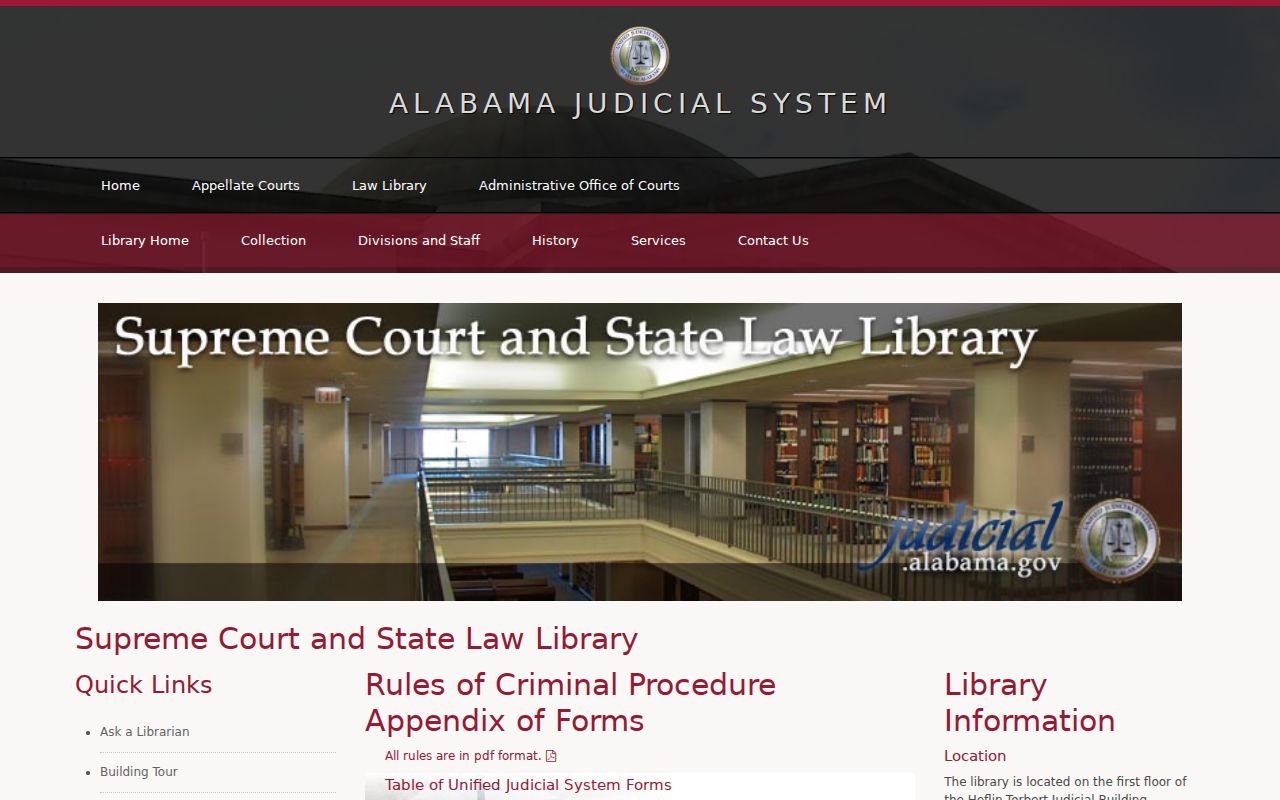
State forms explain the paperwork's shape. For a specific warrant, the Hale County Sheriff and the issuing court still give the answer.
Comparing Arrest, Summons, and Bench Warrants
Arrest warrants, summonses, and bench warrants all end with you in front of a judge. They simply start for different reasons. In Alabama, an alias warrant is the common term for one issued after a failure to appear. A capias also orders a person into custody, though Hale County paperwork more often says arrest warrant or alias warrant.
| Process | Basis | Command | Response |
|---|---|---|---|
| Arrest warrant | Probable cause of an offense | Officer arrests the named person | Confirm court, seek counsel, arrange surrender and release terms |
| Summons | Charge can proceed without immediate custody | Person must appear as directed | Attend by the stated date and follow the case |
| Bench or alias warrant | Missed appearance or required act | Authorizes custody after noncompliance | Ask the issuing judge about appearance, recall, or quash procedure |
A search warrant is a different animal. Alabama Rules 3.8 and 3.9 control when officers may search a place or seize evidence. It is not an arrest warrant, even when one Hale County investigation uses both at once.
Hale Warrant Access Channels
Hale County posts no public warrant portal. Instead it offers a chain of offices. For a personal suspected-warrant question, the county tells you to appear at the Sheriff's Department. For a served court record, ask the Circuit Clerk. District Court is the key court for county misdemeanors, traffic, preliminary hearings, and certain early felony matters. Greensboro Municipal Court covers city police-jurisdiction misdemeanors and traffic at 1101 Main Street, phone (334) 624-8119 ext. 3.
- Use the Sheriff walk-in route for a suspected personal warrant.
- Use the Circuit Clerk for releasable served case records and returns.
- Use District Court for county misdemeanor and preliminary-hearing procedure.
- Use Greensboro Municipal Court for its city-jurisdiction matters.
- Use Just One Look only as a paid case-record aid, not as proof that no warrant exists.
Name the court, the date, and the record sought. A written request should also carry the case or warrant number if known, since broad asks for every unserved warrant conflict with Hale County's stated restriction.
Hale Arrest Form Returns
A historic Hale County exhibit teaches a useful lesson. It separates issuance from execution. Its fields cover a warrant number, agency number, charge or statute, bond information, jail or appearance-bond disposition, and the officer's return. That layout shows why a complaint record, a warrant, a booking record, and a final court disposition are four different documents. A return is the officer's formal report that the process was executed and sent back to court. Recall and quash are separate acts. A recall means the issuing court withdraws the warrant. A quash sets it aside. Neither follows automatically from a payment receipt, an empty online search, or a phone comment from an unrelated office. Get the issuing court's confirmation in Hale County.
If There's an Arrest Warrant for You
Don't trust an unofficial search. Don't drive to the wrong court either. First pin down the likely jurisdiction for the Hale County warrant. Then talk with a lawyer. Confirm the surrender and release process with the issuing court or the Sheriff's Department before you walk in. An attorney can ask whether a voluntary appearance fits, whether bond has been set, and whether a motion to recall or quash is legally available. Court staff explain procedure but cannot give legal advice.
- Write down the alleged charge, location, and any case or warrant number.
- Call counsel before making contact that may lead to custody.
- Confirm which court issued the order and which agency will receive a surrender.
- Ask what identification, bond method, and appearance terms are required.
- After the matter is handled, obtain court confirmation of the new status.
Important: A lawyer can help coordinate surrender, bond, and any recall motion; an online absence does not cancel an active warrant.
The Hale County warrant records overview maps the local courts. It shows which office handles each warrant type.